



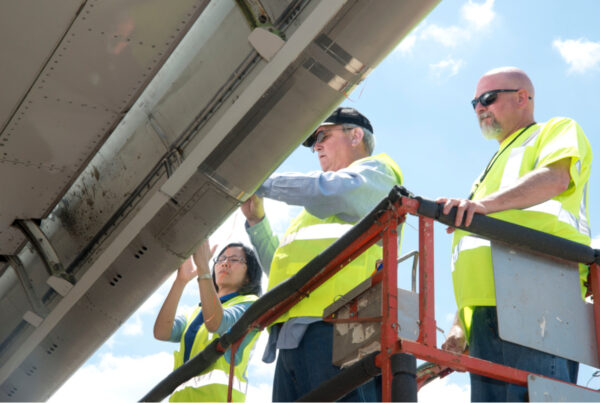
Making a Ramp Check painless (with checklist)

Declan Selleck24 June, 2024
Press and hold down the physical directly on the television casing (do not use the remote control). While keeping the button firmly pressed, insert the power cord back into the wall outlet. 4. Monitor the Update Sequence
The TV displays the brand logo (e.g., "Smart TV" or "Android") and then restarts indefinitely. Software Glitches:
If you are a user of a device utilizing the board or chipset—commonly found in specialized networking equipment, IoT devices, or OEM controllers—you may have encountered performance issues, connectivity drops, or outright system failures. hktrt2861v09 firmware fixed
Locate the "System" or "Firmware Update" tab.
Applying a firmware update to the HK.T.RT2861V09 is the primary method of repairing a malfunctioning television. The term "firmware fixed" encapsulates everything from solving simple app freezes to performing deep eMMC surgery to bring a completely dead board back to life. By understanding the board's specifications and following the correct flashing protocols, users and technicians can turn a "dead" TV into a fully functional smart television once again. Press and hold down the physical directly on
: Provide stable power to the board's VCC (3.3V) and VCCQ (1.8V to 3.0V) lines via the programmer or by carefully powering on the TV chassis mainboard.
If the flashing process fails to start, confirm that the firmware file is named exactly as required by the manufacturer's recovery boot mechanism. If the TV accepts the software but displays distorted lines or a black screen with working audio, you have mistakenly applied a firmware variant built for a different panel structure (e.g., trying to run a V500DJ6 firmware configuration on an LSC400FN05 panel setup). In this case, you will need to source a clean dump matching your specific panel sticker and repeat the process. Monitor the Update Sequence The TV displays the
: Disassemble the TV chassis to expose the HK.T.RT2861V09 board. Find the In-System Programming (ISP) test points on the PCB surface labeled CLK, CMD, D0, and GND .

 Get the famous weekly Ops Bulletin for Pilots and Dispatchers ...




In smaller aircraft which are not required (or able) to carry a full TCAS system, the use of ADS-B for strategic (and sometimes tactical) collision avoidance is a serious concern. This seems to be ignored in this report, presumably on the assumption that TCAS validation will prevent there being a problem. Sadly, TCAS validation is not possible in aircraft without TCAS, hence erroneous ADS-B data may be broadcast and presented to pilots in flight, with the attendant risk of a mid-air collision.